How Do You Know if It’s Safe to Swim in Your Pond?
There are several considerations to keep in mind when determining whether it is safe to swim in your pond. All ponds have different sources of water. Some ponds are fed by underground springs, while others are filled from flowing streams.
Ponds can also be filled with surface water that drains from rain events. The source of water in your pond directly affects its water quality. For example, spring water tends to be the purest source of water since it emerges directly from the ground.
Request a Consultation
Understanding Your Pond
Understanding your pond is crucial to determining whether it is suitable for swimming. Ponds are considered self-contained ecosystems where elements like aquatic plants and wildlife depend on each other to survive.
The main elements of a pond include:
- Plants and algae: Plants and algae are considered producers because they provide oxygen and sustenance for the pond’s inhabitants.
- Animals and insects: Your pond can have life even if you don’t add stock. The living creatures that live in or visit your pond help control the plant population and consume other waste products.
- Bacteria and fungi: These microscopic elements are called decomposers. They help break down organic matter and recycle nutrients back into the pond’s ecosystem.
Maintaining the balance between each element is crucial for ensuring a safe swimming environment. Proper pond management takes care of the ecosystem by encouraging natural processes like photosynthesis, decomposition and nutrient cycling.
Key Considerations for Swimming Safety
To know if it’s safe to swim in your pond, you need to assess water quality and potential hazards. A thorough assessment done by professionals is the best option for water testing and contamination prevention. To determine whether it’s time to call an expert, you can perform a visual inspection to look for indicators of poor water quality and other issues.
Some of the key factors to consider before taking a swim in your pond include:
- Depth: First, determine if the pond is deep enough to swim comfortably. Inspecting the bottom is also crucial to identify potential hazards like sunken trees and submerged rocks.
- Vegetation: Heavy vegetation in and around your pond can cause swimmers to become tangled while swimming.
- Buildup: Sediment and silt can settle on the bottom of the pond. Swimmers can get stuck, and wading through can be difficult.
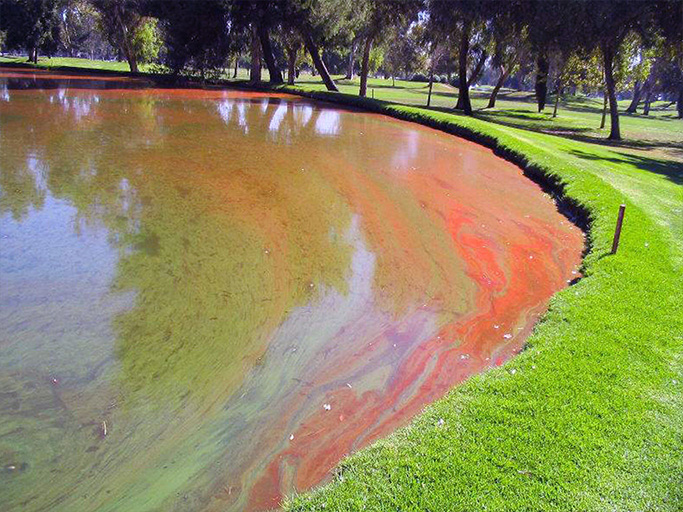
- Contaminants: From overgrown algae to animal waste, many contaminants could make swimming in your pond dangerous to your health. Floating layers of pond scum disrupt the balance of the ecosystem, produce unpleasant odors and contain potentially dangerous bacteria.
4 Types of Contaminants in Your Pond
While different ponds have many different sources, all are susceptible to contamination, animals, insects and algae growth. These environmental factors can make swimming unsafe for a variety of reasons.
1. Human or Animal Waste
Many contaminants make it unsafe to swim in ponds. Although it’s unpleasant to think about, animal and human waste are often contributors. Human sewage and animal waste and manure contain fecal coliform bacteria and E. coli bacteria that make water unsafe for swimming.
Geese and other birds that congregate near water are common perpetrators of contaminating water with waste. However, you may not be aware that your pond is affected by these bacteria. To tell if your pond has waste matter in it, pond and lake management experts can test your water in a lab for contaminants.
2. Dangerous Animals
Although they may not emit harmful waste like mammals and birds, other types of animals can make swimming dangerous. Snakes, snapping turtles, alligators and leeches are all very common in ponds and present a danger for swimmers.
Whether they’re poisonous or predatory, it’s best to avoid swimming in ponds that are known to contain these types of animals. If you’re not sure if your pond or lake contains dangerous animal species, contact AEC for a consultation.
3. Microscopic Parasites
“Swimmer’s itch” is a type of skin rash that develops from an allergic reaction to a microscopic parasite that burrows into your skin. These parasites, common in ponds and lakes, have a life cycle that transfers between snails, waterfowl and other mammals that live around water. When the parasites are in the water looking for the next host, they sometimes find humans instead.
4. Algae and Microcystin
Algae growth occurs in ponds that have excess nutrients. The excess nutrients feed microscopic planktonic algae cells. Some of these algae species are harmless, but others can produce a toxin
called microcystin.
Research suggests that microcystins can have effects on the human liver, kidney and reproductive function. Microcystins are also skin, eye and throat irritants. If you have a visibly large algae growth, you likely need algae management services before even dipping your feet in your pond.
5. Planktonic Algae
Planktonic algae blooms typically show up as green scums that float freely throughout the water. They do not form dense mats like those of filamentous algae.
When planktonic algae are present in a pond, action should be taken to reduce nutrients and control the growth of algae. Ponds with planktonic algae should not be used for swimming.
How to Control Water Contaminants
A pond can certainly be safe for swimming with the proper precautions and monitoring. Taking care of the ecosystem requires regular maintenance and eliminating contaminants.
At AEC, we are experts in pond and lake management. We are committed to meeting and exceeding clients’ expectations and offer a comprehensive menu of pond and lake management services, from algae control to full water quality restoration. Our team performs applications of algaecides and herbicides to control nuisance vegetation for many of our customers.
Most of the products we apply have no swimming restrictions, and you can get in the water soon after the treatment is done. However, in some instances, it may be necessary to use a product that does have a swimming restriction. In these cases, we will notify you of the steps to follow.
Contact AEC to Make Your Pond Safe for Swimming
Aquatic Environment Consultants, Inc. has been managing the health and water quality of ponds and lakes since 1987. Our expert team of aquatic consultants can help create a custom management plan for your pond. If you want to make your pond safe to swim in, give us a call or contact us online today for a consultation!
Contact Us Today