
Algae occur naturally in most lakes and ponds, but certain species pose serious threats to water quality, aquatic life, pets and people. Knowing how to spot harmful algae blooms (HABs) early is essential to protecting the health and balance of your waterbody.
At Aquatic Environment Consultants (AEC), we’ve helped property owners and homeowner associations manage algae-related issues since 1987. We’ll outline what HABs look like, why they form and what to do if you suspect a problem.
What Is a Harmful Algae Bloom?
An HAB occurs when algae populations grow excessively and disrupt the natural balance of a pond or lake. These blooms thrive in nutrient-rich water and warm conditions, especially during the summer months. When algae blooms spiral out of control, they reduce oxygen levels, release toxins that affect fish and wildlife, create foul odors and interfere with recreation.
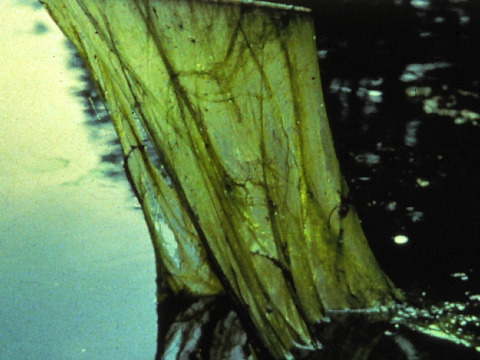
Signs of Harmful Algae Blooms in a Waterbody
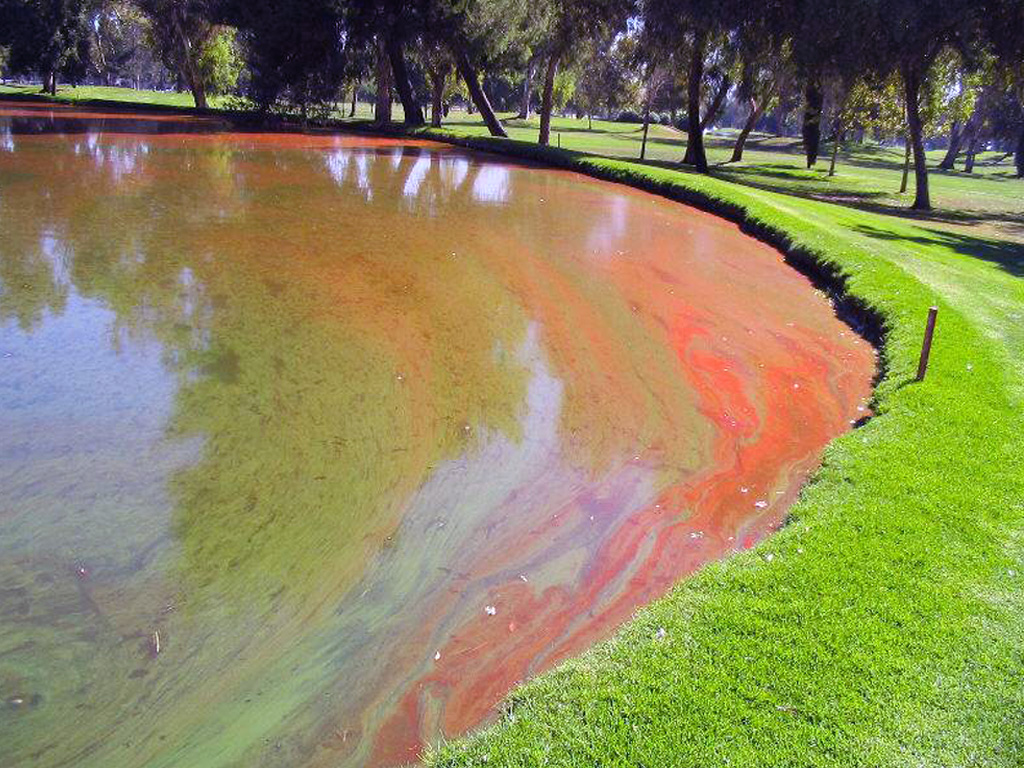
If algae blooms are starting to take over a lake or pond, you may notice a number of telltale signs. These include:
- Surface scum
- Paint-like streaks
- Thick floating mats
- Cloudy or pea-soup-colored water
- Clumps along shorelines
- Musty or sulfur-like smells
- Fish gasping at the surface
- Sudden fish deaths
- Reduced activity from aquatic organisms
The Effect of Harmful Algae Blooms
HABs create immediate effects and long-term consequences that ripple through entire ecosystems and local economies.
Ecological damage may include:
- Disrupted food chains and reduced beneficial organisms.
- New dead zones in deeper waters where aquatic life cannot survive.
- Reduced water clarity and oxygen levels.
- Stressed waterfowl and aquatic birds that depend on healthy habitats.
Algae blooms can also have a range of economic impacts: They can:
- Lower nearby property values.
- Reduce tourism and recreation revenue.
- Increase maintenance costs for property managers.
- Cause lasting reputational damage for businesses.
Without proper management, HABs can transform vibrant aquatic ecosystems into liabilities.
Why Harmful Algae Blooms Develop
HABs develop when excess nutrients, warming temperatures and poor water circulation create ideal conditions for harmful algae to thrive. These conditions may arise for a variety of reasons:
- Agricultural runoff carries nitrogen and phosphorus-rich fertilizers into waterways after heavy rainfall.
- Faulty or aging septic systems leak nutrients into groundwater that feeds lakes and ponds.
- Lawn fertilizers applied near shorelines wash into the water during rainstorms.
- Rising water temperatures from climate change extend the growing season and favor toxic cyanobacteria species.
- Stagnant water concentrates nutrients and algae.
- Poor circulation prevents oxygen from reaching deeper zones.
- Low oxygen levels kill natural competitors and allow harmful algae to dominate.
Why Choose AEC for Algae Management?
As an industry leader since 1987, AEC delivers high-quality, professional services designed to exceed your management goals. We use comprehensive algae management strategies to target the root causes of HAB development, improving circulation and oxygen levels so your lake or pond stays healthy. Our services include:
- Manual removal
- Targeted treatment products
- Nutrient management programs
- Aeration systems
- Aquatic plant adjustments
Our support continues even after we have revitalized your lake or pond. We offer ongoing monitoring and maintenance to prevent future blooms from overwhelming the ecosystem.
Contact AEC for Lake and Pond Management Services
Act now to protect your aquatic environment from excessive algae blooms. Call us at 717-913-5613 today to find out how we can transform your lake or pond.
8 Comments
Comments are closed.