
A pond is a beautiful focal point of private and commercial properties. However, a lack of upkeep can lead to unpleasant smells. When an environment smells like expired food or methane, action is required.
A lack of oxygen, combined with dead plants and fish waste, allows bacteria to disrupt a pond’s ecosystem. The presence of excessive algae in lakes and ponds can exacerbate these issues. Here is what you need to know about smelly ponds and how to fix them.
Reasons for Smelly Ponds
Common causes of pond odors include the following.
1. Excessive Algae Growth
Excessive algae can create foul odors in ponds. When plants die and decompose, they limit the oxygen supply needed to break down organic material. People typically associate algae overgrowth with musty pond odors.
Property owners can control nutrient levels by creating a healthy balance of aquatic plants. Incorporating more aquatic plants and physically removing algae is proactive for controlling smells.
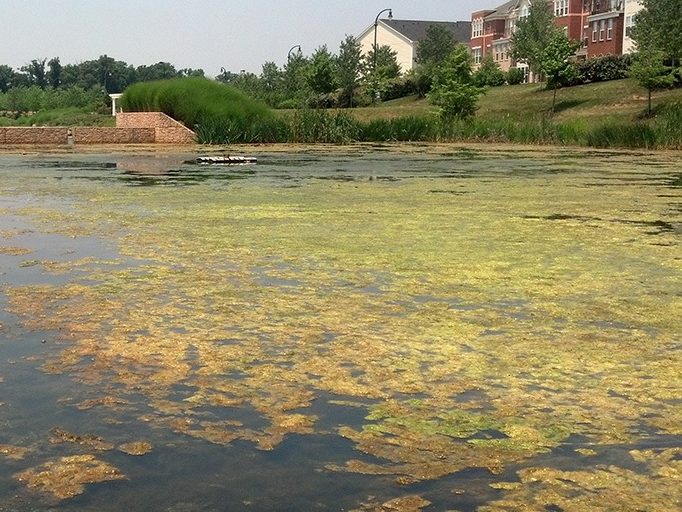
Does your pond or lake look like this? Call us now!
2. Decaying Organic Matter
Dead plants, leaves and fish release hydrogen sulfide as they break down in pond water. You can control the rotten-egg smell in your pond by removing surface debris.
Always monitor how much fish food you are adding to a pond. Fish will only eat a certain amount of food before it lingers. Excess food can be detrimental to an ecosystem, especially in low-oxygen pond environments.
3. Pond Scum and Sludge
Some organic matter tends to stick to the sides and bottom of ponds. Over time, you may notice a slimy layer covering rocks, fountains, water features and similar decorations. Pond scum and sludge are major contributors to unwanted odors. This can happen due to several reasons. The most common include lawn fertilizers entering pond water via runoff and leaves falling in large quantities and sinking to the bottom of a pond.
Yearly maintenance plans from a professional are essential for clearing up this waste.
4. Stagnant Water
Algae and bacteria have an easier time growing when water is still. You may find that your pond begins to smell as seasons change and warm weather comes in. Introducing fountains and running them regularly is one way to combat this problem.
Ways to Correct a Stinky Pond
Consider the following methods for preventing smells and maintaining ponds.
1. Aeration
Working with professionals to install an aeration device helps prevent water stagnation. Companies like AEC Lakes offer flexible aeration solutions developed by Otterbine and AquaMaster®. Add some aesthetic beauty to your pond with products that feature lighting and diffuser systems.

2. Professional Algae Control
AEC can support you with professional algae control services for challenging circumstances. Partner with consultants who will suggest appropriate biological controls, like fish and insect species, as well as nutrients, herbicides and algaecides to manage overgrowth. Working with a local expert who understands your climate and conditions is critical for keeping small water sources clean and odor-free.
3. Pond Maintenance Plans
If you find yourself asking why your pond smells bad multiple times throughout the year, consider a professional pond maintenance plan from a local service provider. AEC serves the Chambersburg, Pennsylvania, area and surrounding states with routine maintenance options to keep ponds healthy and smelling fresh.
Frequently Asked Questions
A smelly pond can be a real headache. If you’re noticing unpleasant odors coming from your pond, you’re not alone. Here are some of the most common questions about what causes pond smells and what you can do about them.
What Causes Unpleasant Odors in Ponds, and How Can They Be Fixed?
What causes unpleasant odors in ponds can include excessive algae growth, decaying organic matter, pond scum or stagnant water, and you can fix them with pond maintenance plans, aeration or algae control. If your pond smells bad, start by removing debris, increasing aeration and considering an algaecide or beneficial bacteria treatment. These steps help restore balance and keep water fresh.
What Proactive Steps Can Be Taken to Prevent Pond Odors and Maintain a Healthy Pond Ecosystem?
The proactive steps that can be taken to prevent pond odors and maintain a healthy ecosystem include boosting aeration, managing organic waste, adding beneficial bacteria, controlling nutrient runoff and introducing aquatic plants.
- Boosting aeration: Keep water moving and oxygen levels high.
- Managing organic waste: Stop odors before they start by removing organic debris.
- Adding beneficial bacteria: Break down waste naturally.
- Controlling nutrient runoff: Stop algae blooms.
- Introducing aquatic plants: Filter excess nutrients, shade your water and lend beauty to your pond.
What Do Different Types of Pond Odors Signify About the Underlying Problems?
Different types of pond odors signify specific chemical or biological imbalances. A sulfur or rotten-egg smell usually means there’s not enough oxygen in deeper water, causing materials to decay. Musty or earthy smells often point to algae or decaying vegetation. Identifying the specific odor can help you find the root cause and pick the right solution.
How Can Professional Services Help in Managing and Preventing Pond Odors?
Professional services can help in managing and preventing pond odors by targeting the root cause of the odor and choosing solutions that restore a healthy ecosystem. When simple fixes don’t work, experts can pinpoint the problem and design a tailored treatment plan. Services like aeration and specialized algae control play a large part in long-term freshness and a thriving pond ecosystem.
Contact AEC for Service Today
With AEC, there is no need to wait for ponds or lakes to become murky or smelly. Our specialists focus on making bodies of water healthier and appealing to the senses so that you, customers and visitors can spend time near your pond for an experience everyone will remember for the right reasons. Contact AEC to learn how we can assist you today!
2 Comments
Thanks for sharing this and for those new to ponds, always ask the professionals for help
Add Comment