
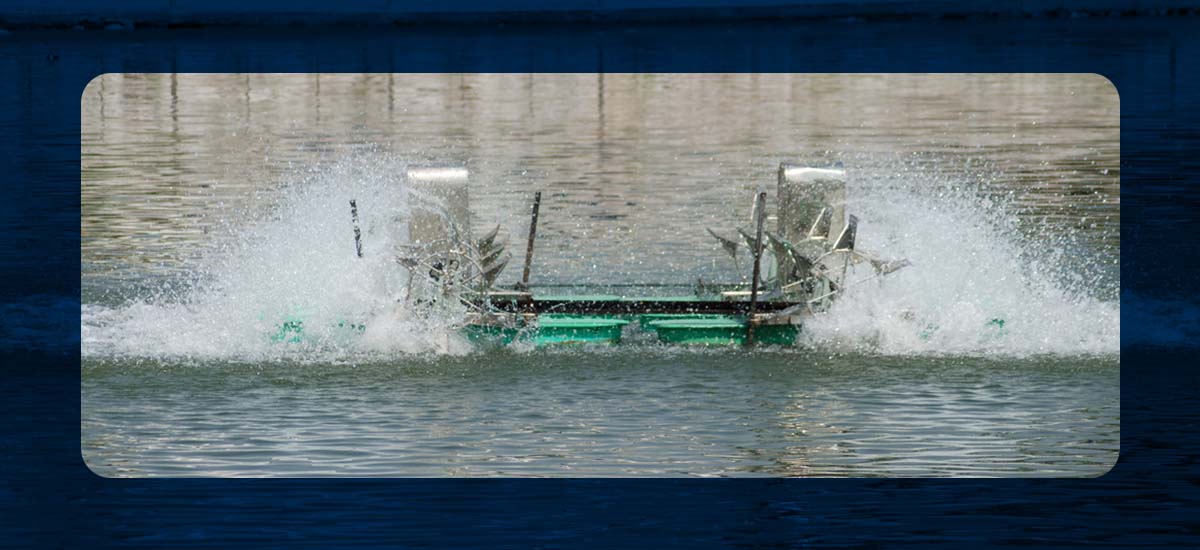
Choosing a fountain or aerator for pond management begins with the pond’s dimensions and depth. Low oxygen allows organic material to accumulate and can favor algae, so your fountain or aerator choice has to match how deep the oxygen deficit runs. Water conditions and the fish population in the pond determine the level of circulation needed, and the appearance goals you have for your pond help narrow down the choice.
Floating fountains serve properties that want a visible surface feature as part of pond management. If you want stronger movement near the waterline, a surface aerator might be the more functional option. Circulation below the surface may call for diffused aeration as a management approach.
What Is the Difference Between a Pond Fountain and an Aerator?
A pond fountain pumps water through a nozzle to create a spray, while a surface aerator churns the upper water without forming a pattern and a diffused aerator lifts deeper water from the bottom of the pond toward the surface.
Floating Fountains
In a floating fountain, the motor draws water from the first few feet of water and pushes it through a nozzle that creates the spray pattern. Air-to-water contact increases oxygen exchange before the water lands back in the pond.
With circulation concentrated near the surface, floating fountains suit shallow ponds that do not thermally stratify, which is a big part of the pond fountain vs. aerator decision.
Surface Aerators
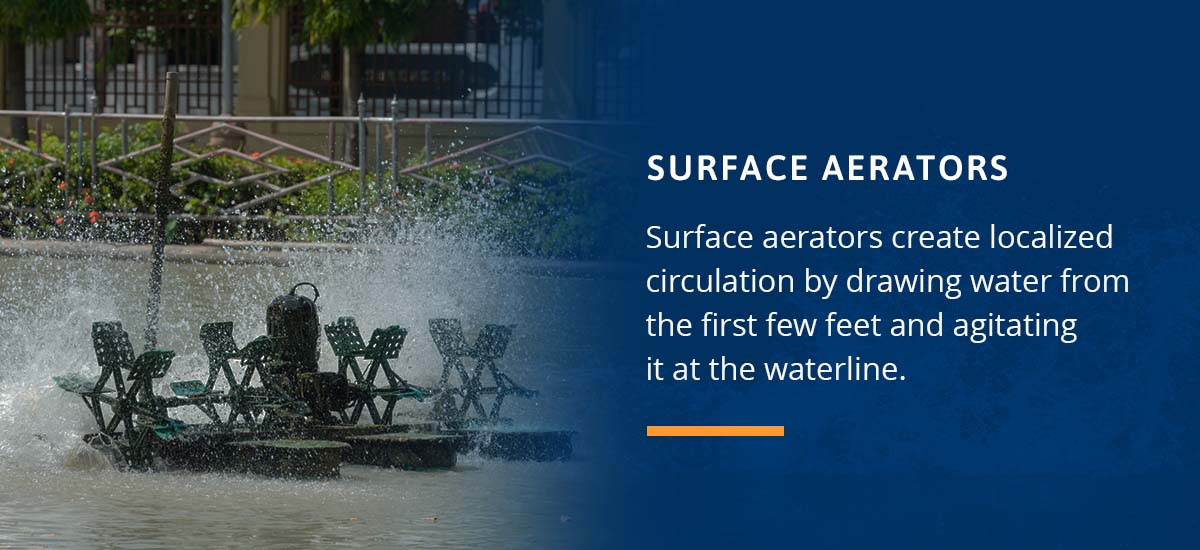
Surface aerators create localized circulation by drawing water from the first few feet and agitating it at the waterline. As the moving water contacts the air, oxygen transfers into the upper layer and circulation spreads it through the active surface zone.
The function of this system is oxygen transfer and circulation, so there’s no decorative display. It’s a good choice for ponds that are too shallow to form distinct warm and cool layers during summer, since they won’t require bottom-up circulation.
Diffused Aerators
With a diffused aerator, a compressor pushes air to the bottom diffuser, starting circulation from the deepest part of the pond. During summer, warmer surface water in lakes and ponds can separate from cooler bottom water, and biological activity may leave the lower layer oxygen-poor.
The rising bubbles create lift that carries deeper water toward the surface, where it absorbs oxygen and circulates through more of the water column. Oxygen availability at depth helps aerobic bacteria break down organic matter more efficiently and may reduce odor and make the habitat safer for fish.
For a deep pond, you don’t need to choose a pond aerator vs. a fountain. You can use a fountain for appearance and a diffuser for deeper circulation.
Choose the Right Pond System With AEC Lakes

AEC Lakes records your pond’s dimensions and depth, then reviews its water conditions before matching a system to your management goals. When a fountain fits your needs, AEC can help you choose the appropriate one and handle its installation and future repairs. If underwater circulation is your priority, we can advise you whether a surface aerator or a diffused aerator would be the better choice.
Our team can also conduct water quality testing and lake monitoring to inform more complex decisions. Contact AEC Lakes for a consultation to make your lake or pond beautiful and healthy.